Posted on | September 28, 2012
Written by | Jack Robertiello
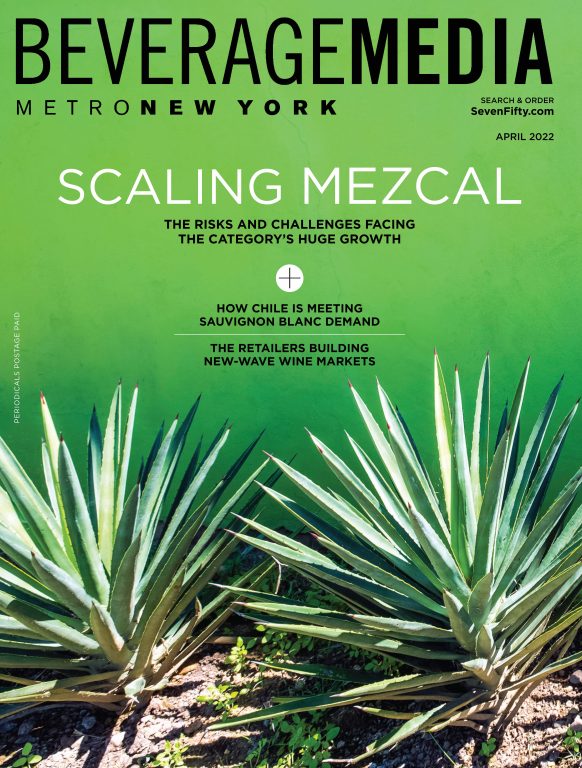
Of all the effects wrought on the spirit world by the 21st century cocktail revolution, none was as unpredictable and as fascinating as the emergence of mezcal as a quality ingredient.
Even when tequila shed its rambunctious reputation, its crazy uncle (see sidebar on mezcal facts) could unnerve even the most seasoned drinker with its rustic tang and smoky assault. If tequila was Robert Downey Jr., a bad boy gone good, then mezcal was Charlie Sheen—unrepentant, unregenerate and bad down to the bone.
That was the image, anyway, and it was hard to erase, though a few voices continued to cry out in the wilderness. One man in particular, Ron Cooper of Del Maguey, persisted, developing great respect for the varieties of single-village mezcals he’s brought here since 1995.
Bars and restaurants featuring Mexican spirits have done their part, and cocktail bars as well, notably led by NYC’s Mayhuel, where barman Phil Ward’s Oaxacan Old-Fashioned caught attention and has been frequently copied. Restaurateur José Andrés celebrated the spirit at his annual Mexican festival in March at Las Vegas’s China Poblano; the celebration included the Oaxacan Swizzle (Del Maguey Vida, ruby port, fresh pressed apples, lime, ginger and housemade orange bitters). And at Andrés’s Oyamel in Washington, DC, his mezcal drinks include the High Tea (Los Nahuales Reposado Mezcal, chamomile tea, honey and tobacco bitters). Clearly, mezcal has proven to be well adapted to contemporary drinking.
Meanwhile, with renewed interest in Oaxaca, a dozen or more new brands with devoted advocates now make the rounds. And the thirst for education among fans spurred Doug French, maker of Scorpion Mezcal since 1996, to tour the U.S. leading a four-step master mezcalier certification program (www.mastermezcalier.com) in cooperation with the Mexican government.
“The long road has just begun with education and awareness of this world-class, ancient spirit,” says Barbara Sweetman, VP and sales manager at Scorpion and Mezcals de Oaxaca. “We’re taking the time to promote this program in order to give the real movers and shakers in the industry the tools and information they need to recommend, sell, taste and educate in turn.”
Carving a Niche On-Premise
Bars and restaurants showcasing mezcal are blooming in many cities—New York, Los Angeles, Chicago, San Diego, and Austin, among others. Take the back room bar of popular Austin spot Takoba, where Cantina El Milamores now offers more mezcals than tequilas, plus a flight menu that features and contrasts various agave varieties and villages. Following Ward’s lead, mezcal, tequila and sotol (another legally defined Mexican agave spirit) get the Old-Fashioned treatment there.
Meanwhile, San Diego’s El Take It Easy features as many cocktails based on mezcal as tequila. In Los Angeles, an extensive array of about 50 mezcals are the attraction at the bar Mezcaleria, representing the category in a new light. New York City’s Viktor & Spoils, like the Mezcaleria, helped pioneer menuing mezcals by agave species (espadin, tobala, madrecuixe, dobadaan, others).
The changes have been dramatic, and in general, Ron Cooper is pretty pleased. “I got so used to owning the category, I was almost insulted,” he says. “But I’ve been convinced that all the new energy going into mezcal actually helps us all.” In addition, since joining up with supplier Gemini Wine and Spirits (a division of Sazerac), Del Maguey has been getting national promotional support.
Lately, the mezcaleros received a little help from some deep-pocketed friends. William Grant has just introduced Montelobos. Zignum entered the U.S. market last year with financial backing of Mexican Coca-Cola bottlers; as did Wild Shot, a brand owned by country star Toby Keith, whose three units of I Love This Bar & Grill are serving plenty of the brand, according to his spokesperson.
Richard Betts, head of Sombra, thinks the entry of Toby Keith and William Grant will only benefit the smaller guys. “Keith will bring in a whole group of people who wouldn’t otherwise be in the category, who might trade up to us or other brands,” he says.
The range of other mezcal brands—Sombra, Ilegal, Wahaka, Danzantes, among others—now provide retailers and bar owners a broader choice. And the increasing availability of quality mezcals at a price point lower than Del Maguey’s single-village iterations has been crucial. (Cooper designed Del Maguey Vida to be priced in the mid-thirties and mixable in cocktails, in response to demand from the trade.)
Also important has been the introduction of attractive packaging, different varietals and a range of styles. A version of Fidencio, for instance, is made “sin humo,” without smoke. Scorpion now supplies estate-grown tobala silver and añejo mezcals. Numerous brands are targeting the mid-thirties price point, aiming to be the entry mezcal.
Sombra now has a moderated smoke quality, says Betts: “There should be some smoke but the spirit with too much smoke doesn’t taste like the place as much as tasting like the process.”
Spirits impresario John Henry, who has launched his own brand, El Buho, in three markets including New York, says that the expanding market definitely includes women who are taking to it in cocktails and even as a culinary ingredient—part of the smoke ingredient trend. One woman at a tasting recently told him, “This is my white Lagavulin,” referring to the smoky Islay single malt Scotch.
With on-premise growth still slowed by the recession, Henry sees the off-premise environment as more promising. Specifically, the logical market is the expanding pool of tequila drinkers, says Gino Luci, brand manager for Montelobos. “In most basic terms, we are targeting premium tequila drinkers who are looking for something new and different. One of the biggest challenges with mezcal is that it’s a relatively misunderstood category. It has a rich history and legacy. In response, we are working to educate not only about Montelobos, but also the complexity and unique offerings of the category overall.”
Mezcal Basics
Just as all Cognacs are brandies but not all brandies are Cognacs, all tequilas are mezcals but not the other way around. Mezcal can be made from a variety of about 30 agave species (including the Blue Weber from which tequila is made by law) and is distilled in one of seven Mexican states, though more than 90% of mezcal comes from Oaxaca.